 Tom Jackson
Automattic just launched Spacefast as a new company for getting AI-built websites and apps online. In its press release, Automattic says you keep working in the AI you already use, Spacefast gives that agent a head start, and the result goes "live in seconds" with a private link your team can comment on. That last phrase is Automattic's claim, not a speed test we ran. The bet underneath is clearer: WordPress.com's parent is selling a path to ship sites that may never touch WordPress.
What Spacefast Is
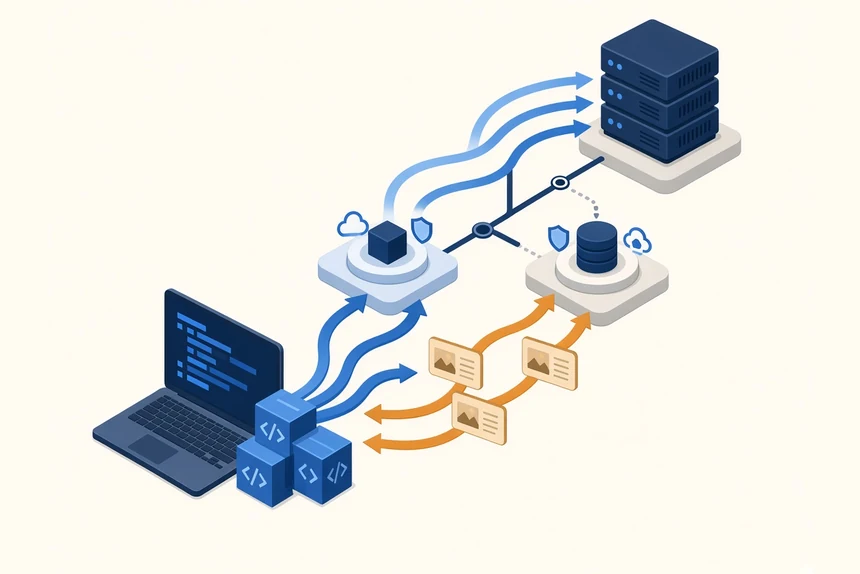
Spacefast's own site is blunt: it "is not an AI builder." You connect an agent, and Spacefast provides skills, tools and hosting. The press release lists ChatGPT, Claude, Muse, Grok Bot, OpenClaw, Hermes and coding agents such as Claude Code, Codex and Cursor, plus official plugins, an API, a CLI and MCP.
Each project is a Space. According to Spacefast, new Spaces start private. You can invite people, share a link or go public later. Every change saves a version. Comments can be pinned on the page for an agent to act on. Every Space includes a database, file uploads and built-in stats. You can also drop a folder on drop.fast, connect Git, or run npx spacefast publish. The homepage lists Next.js, TanStack Start, Astro and PHP; the press release also names Vite.
Founder and CEO Batuhan İçöz joined Automattic through its acquisition of Texts and built the first version during Radical Speed Month, after which Automattic made it a company.
How It Is Priced
Current pricing on Spacefast's site is more specific than the launch release:
- Personal: $0, no card required, $1 of usage a month, 20 Spaces and 20 custom domains.
- Go: $5 a month, $5 of usage, 100 Spaces and 100 custom domains.
- Pro: $15 a month, $15 of usage, 500 Spaces, with five members included, then $15 a month each.
- Enterprise: custom pricing.
Usage past the included credit bills at month's end. The press release said Go includes "unlimited spaces" and described Pro as "$15 a month per member." The live page lists 100 Spaces on Go and prices Pro at $15 a month per team, with five members included. We follow the pricing page.
The release also says app authentication, transactional email and shared team knowledge are "coming in the next few weeks." Some Spacefast pages already list authentication and transactional email on Free, so we are not treating those as confirmed generally available.
What Independent Reporting Adds
TechCrunch's Ivan Mehta places Spacefast in the "vibe-coding" hosting wave. He reports that it competes with Lovable and Emergent, "which offer both interface and rails for vibe-coded apps, but in a more open way" — TechCrunch's characterization, not a product test of ours.
İçöz tells TechCrunch that Spacefast's edge is letting people keep the agent they already use, and that enterprises face "IT sprawl" as marketing teams spin up landing pages on such services. Planned additions he mentioned include analytics, WordPress integration and WooCommerce; those are not dates we verified. TechCrunch reports a September soft launch, which lines up with Spacefast's changelog: sign-ups opened September 26, and private beta ended September 28.
Most useful for CMS teams is Mehta's account of İçöz's view: people are already making sites in ChatGPT or Claude rather than deploying on WordPress, and "some sites won't need a content management system at all as the web expands."
Why It Matters For CMS Teams
That is the line worth sitting with. A faster path from prompt to public URL will pull more teams outside the CMS, even when the company already has one. The DevContentOps problem gets sharper, not weaker: who approves the change, where canonical content lives, how the same story is reused, and how you roll back a bad publish.
Spacefast does offer some of the raw materials, as described: private previews, version history, on-page comments, approval checks for sensitive agent actions, and export. That is a start, not a full editorial or multi-channel CMS. Automattic says WordPress VIP and Pressable customers face "no new vendor to approve," with Spacefast connecting to "the site you already run." We have not verified how deep that connection is today.
Teams already running structured content and agent workflows on enterprise CMS platforms will recognize the same requirements on a different stack: keep a human in the approval path, prefer preview before production, and treat agent output as content that still needs versioning, reuse and a clear publish step. We are not ranking products here.
What Web Teams Should Do
- Inventory the shadow sites. Find landing pages already living on vibe-coding hosts, including any Spacefast Spaces, and decide which belong in your official stack.
- Do not confuse a host with a CMS. If a Space becomes durable, ask how content will be reused and retired, not only how fast the first URL appeared.
- Write an agent publish policy. Spacefast can let an agent edit a live Space from comments. Require a private preview and a person to approve sensitive changes.
- Model the bill before you scale. Start on Personal or Go, watch included usage, and use spending caps on paid plans.
- Check the exit path early. Spacefast says you can download files and export app data; apps on its runtimes may need code changes to move.
- Revisit WordPress and auth claims as they firm up. Confirm VIP, Pressable, WooCommerce and "coming soon" features on the docs and pricing page.
Spacefast is less a verdict on WordPress than a warning about where new sites will get built if official workflows feel slow. The teams that keep control will treat agent publishing like any other release: preview, review, promote and reuse.